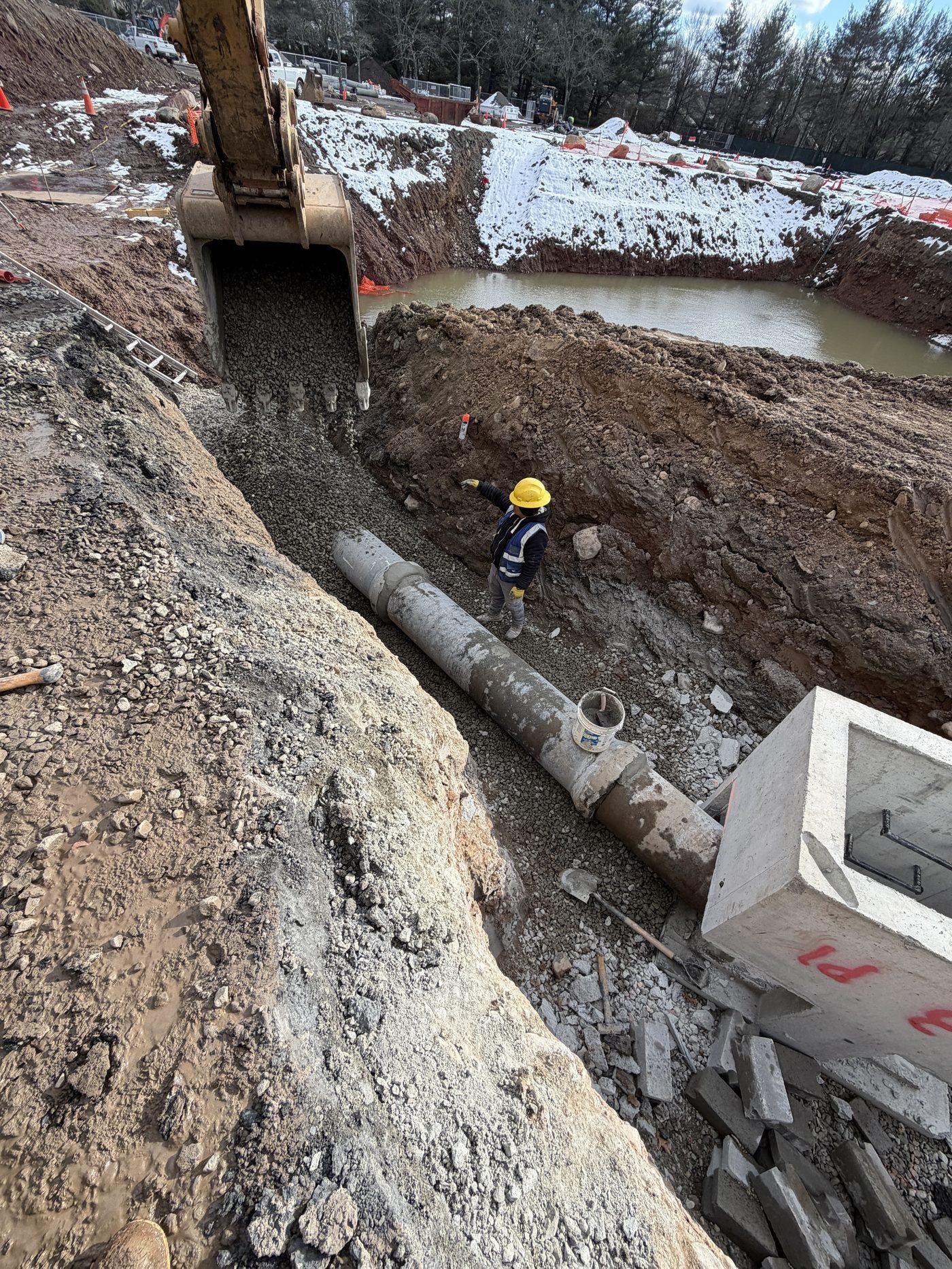
Excavation work is largely invisible once it's done — you don't see the trench, you see the finished lawn or driveway on top of it. That makes it one of the easier trades to cut corners on, and one of the more expensive ones to fix after the fact if something goes wrong. Here's what's actually worth checking.
Licensing and insurance
In New Jersey, this isn't optional paperwork — it protects you if something goes wrong on your property. Ask directly for proof of insurance and confirm it's current, not just referenced on a website.
Who's actually running the job
On a lot of excavation jobs, the person who gave you the quote isn't the person operating the equipment on your property. Ask who's actually on site day to day, and whether that's the same person you're talking to now.
How they handle utility markouts
A contractor who treats 811 utility markouts as a formality to rush through is a contractor who's going to hit something eventually. Ask how they handle it — the answer should be specific, not vague.
References for similar work
A contractor who's done plenty of driveways but never touched a foundation excavation isn't necessarily who you want digging your foundation. Ask for references on work similar in scope to yours, not just any past job.
How they explain the plan
Before any digging starts, you should understand what's happening, why, and roughly how long it will take. If a contractor can't explain the plan in plain language, that's usually a sign they don't have one.
Our approach
Wellington Contracting is fully licensed and insured in New Jersey, and Jack is the direct point of contact on every project — no middlemen, no subcontracted project management. Any additional trades brought onto a job are personally vetted.