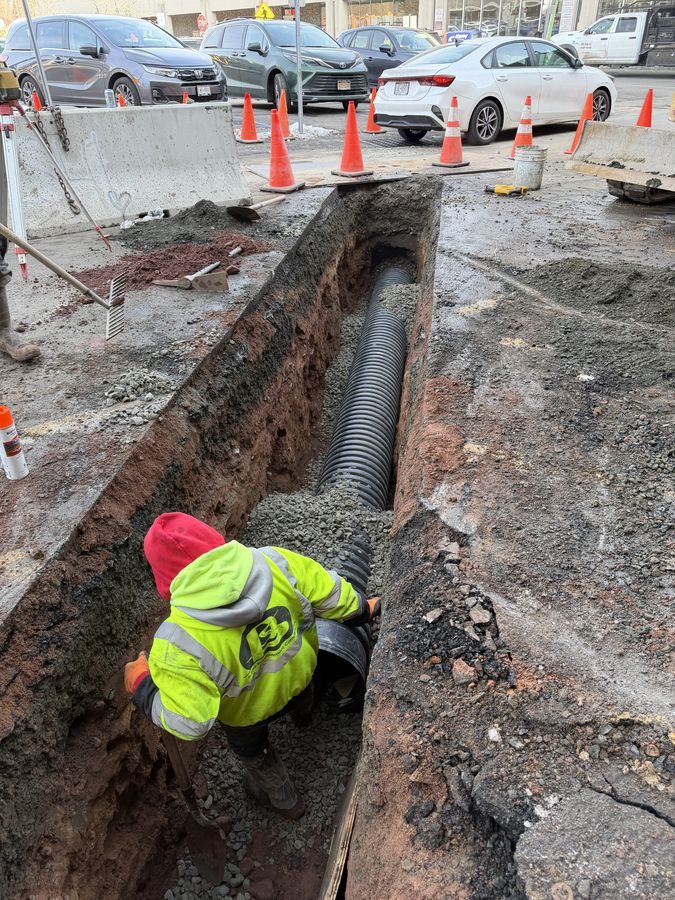
Utility trenching looks simple from the outside — it's a line in the dirt. In practice, there's a lot more to get right, and mistakes are expensive and sometimes dangerous. Here's what's actually involved.
Call 811 before anything else
New Jersey law requires utility markouts before excavation, and this applies to homeowners doing their own digging too, not just contractors. Hitting a gas or electric line isn't just costly — it's genuinely dangerous.
Depth requirements vary by utility
Water, sewer, electric, and gas lines all have different required burial depths, and local codes add their own specifics on top of that. Getting the depth wrong can mean a failed inspection or, worse, a line that's vulnerable to frost heave or accidental damage later.
Bedding and backfill matter as much as the trench
How a pipe or line is bedded and backfilled affects its long-term performance as much as the trench itself. Proper bedding material prevents settling that can crack pipes or create low spots where water collects.
Coordinating with your utility provider or inspector
Depending on the utility, work sometimes needs to be coordinated directly with the provider (like PSE&G) or inspected by the local utility authority before the trench gets backfilled. Skipping this coordination is a common reason trenching work fails inspection.
Restoring the surface afterward
Once the line is in, the trench needs to be backfilled properly and the surface — lawn, driveway, or landscaping — restored so it doesn't just look like a scar across the property. Settling over the following months is normal to a degree, but a trench that sinks noticeably usually means it wasn't backfilled correctly the first time.
Why this isn't usually a DIY project
Between the permitting, the depth requirements, and the coordination with utility providers, most trenching jobs end up more involved than they look at the outset. We handle the coordination and the digging so you're not the one on the phone with three different departments.