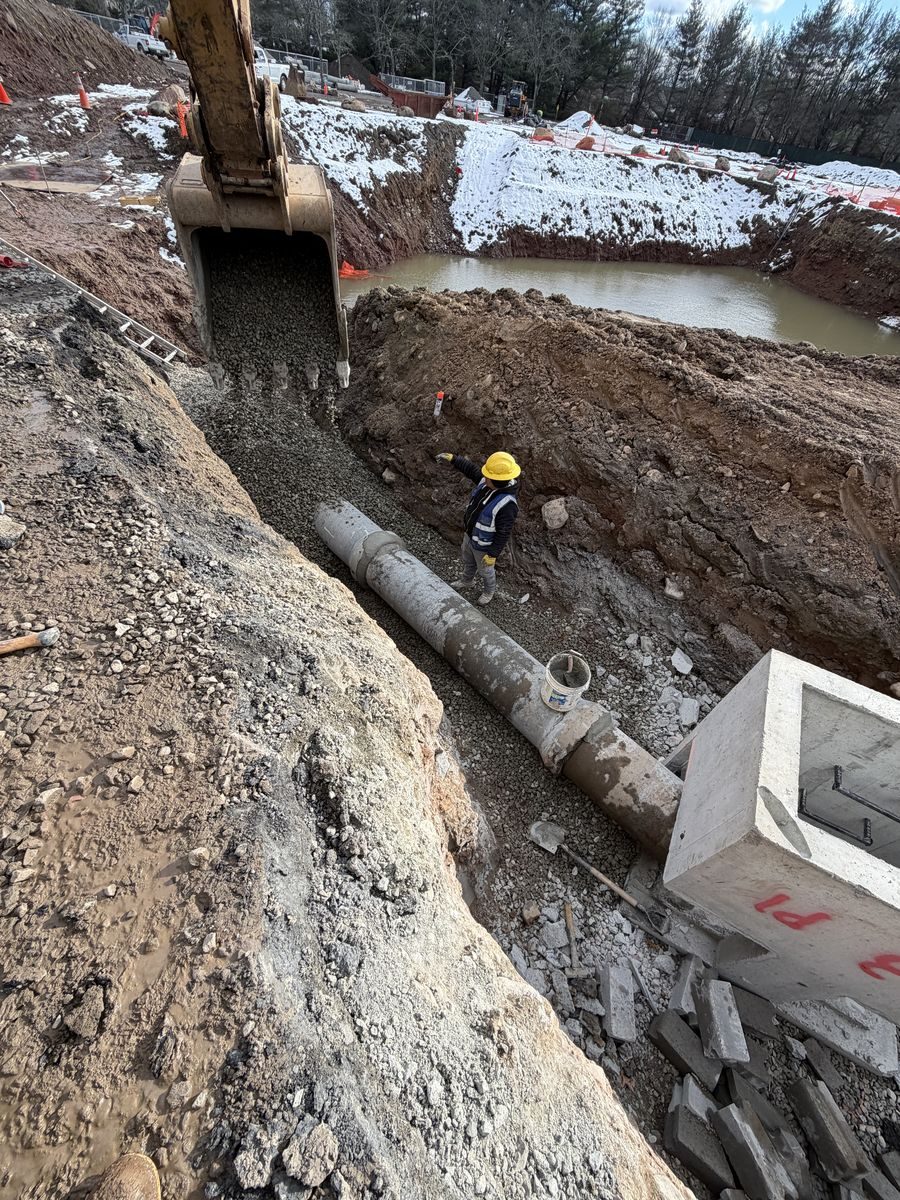
Excavation work doesn't have to stop when temperatures drop, but frozen ground and winter weather change how a job gets planned and sequenced. If your project is scheduled for the winter months, here's what's different.
Frost depth changes the dig
Once the ground freezes, the top layer becomes significantly harder to break through, and depth requirements for footings often go deeper than they would in warmer months to get below the frost line. This is planned for up front, not discovered mid-project.
Weather windows matter more
We watch the forecast closely and sequence work around clear stretches. Digging into frozen or saturated ground creates problems — unstable trench walls, poor compaction — that cost more to fix than the delay of waiting a few days would.
Site protection
Exposed soil and open excavations get covered or protected between work sessions in winter to keep the ground workable and to prevent water from pooling and freezing in the trench overnight.
Concrete and curing
If the project involves footings or slab work, cold weather concrete needs extra attention — insulation blankets, adjusted mix, and sometimes temporary heat — to cure properly. Skipping this step is how you end up with cracked or compromised concrete in the spring.
Why winter can actually be a good time to start
Permitting and scheduling are often faster in the winter months since fewer projects are competing for inspector time and subcontractor availability. If your addition or renovation needs excavation as the first step, starting site work in winter can put you ahead of the spring rush instead of behind it.